
President’s Message Fall 2026
I often quip that with each gray hair (and I have a ton of them) I get better at admitting what I don’t know. And—hopefully—a little better at respecting the wisdom of those who do. One of the many things I’ve learned from observing Sambhali Trust for the last seven years is what can be accomplished when action is centered on respecting the wisdom of those who are closest to the matter.
I’ve written before that one of the keys to Sambhali Trust’s success is its evolution over nearly two decades from a single Empowerment Center to a holistic suite of programs addressing the multiple barriers women and girls in deeply patriarchal Rajasthan encounter in seeking agency over their lives. Sweta Waghlea explains in her piece, Connected Approach: How Sambhali Builds Lasting Change, how these programs create a whole. And Bheekho’s story in In Their Voices illustrates this beautifully. Together, these resources enable women and girls to thrive. They will change the course of their lives and those of their families and will become leaders in their communities. But without each essential part, the hard work spent in gaining education or vocational training may be lost to problems ranging from sexual abuse to anemia.
This evolution was only possible because from its start Sambhali Trust was set up to listen, and so it grew in response to the expressed needs of those in its programs.
But how did this come about? How did women and girls who had been robbed of their agency gain the confidence and the courage to ask for what they needed?
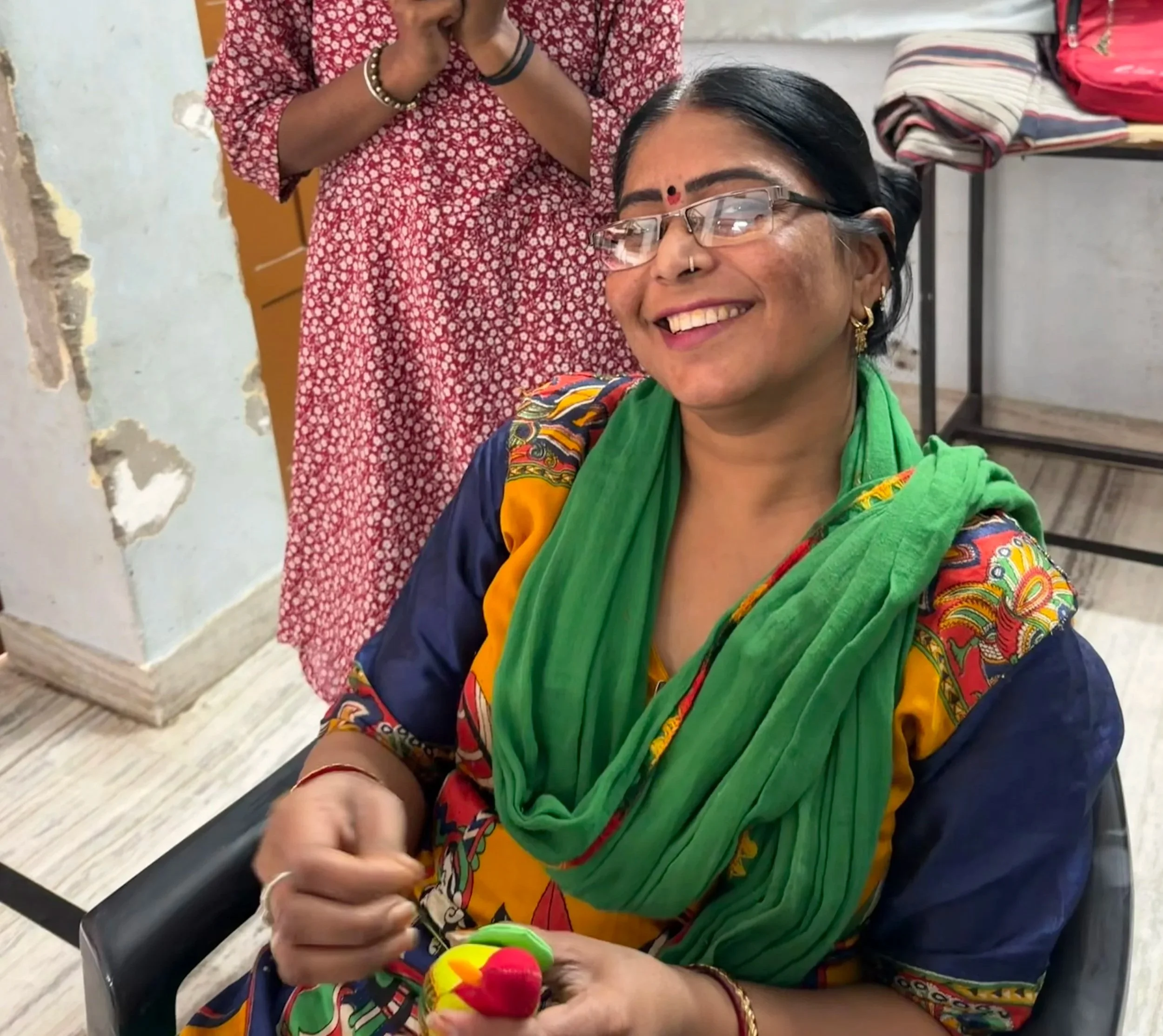
It began with women like Reshma Kataria, who joined Sambhali Trust in the second year of its Empowerment Center program. Today she teaches sewing in Sambhali’s Boarding Homes and works with other Sambhali graduates through Jodhpur Artisans to create handmade clothing, toys, and household items. When Reshma came to Sambhali she was a young mother facing ongoing domestic violence. Sambhali Trust didn’t have a gender-based violence program then, but it created a space where women built a sisterhood, a safe place where Reshma could speak her darkest secrets. And in response, a strong community of women and teachers gathered to stand up with Reshma as she gained safety and independence. Reshma’s courage became a legacy for future generations of Empowerment Center students—and the seed that blossomed into the Nirbhaya Program that now helps 4000 people each year.
It continued with teachers like Asha Bhati who created an atmosphere of mutual support by being willing to express her own vulnerabilities. As recently described in a message about a day in Asha’s life:

Asha talks openly with the women in the Empowerment Center about her life—balancing a household with three generations living under one roof and raising teenagers who are finding their own voices. Last year, after the loss of her mother, Asha struggled to find the strength to teach. The women at Sambhali carried her through, showing up for their teacher just as she shows up for them. By sharing her own struggles, Asha creates a safe space where women feel comfortable talking about their own. Many of their stories are about domestic violence, financial dependence, or feeling trapped by circumstances they believe to be their fate. Asha listens with compassion, connects women with Sambhali Trust's counseling services, and reminds them that education is their most powerful weapon.
The ability to speak up expands because new staff like Kamlesh Ratnu, who leads Sambhali’s Sustainability and Advanced Craft Initiative described in Anne Kelleher’s piece ("Sustainable Fashion Arrives at Sambhali”) carry forward Sambhali’s core belief that collaboration creates better results than top-down instruction. The menstrual pad program illustrates this beautifully. Women felt comfortable talking about menstruation with a man for the first time because they knew at Sambhali they would be respected, that their voices were important and would contribute to a better outcome for all.
At the core of Sambhali is a belief that everyone should be treated with dignity, not only to be kind, but because of an abiding belief in the importance of what each person has to say. An understanding that collaboration is not an exercise, but a way to thrive. And, in turn, Sambhali Trust is a testament to what can be accomplished when we recognize what we don’t know, and we respect the lived experience of others that do.
And all of that is worth many a gray hair.