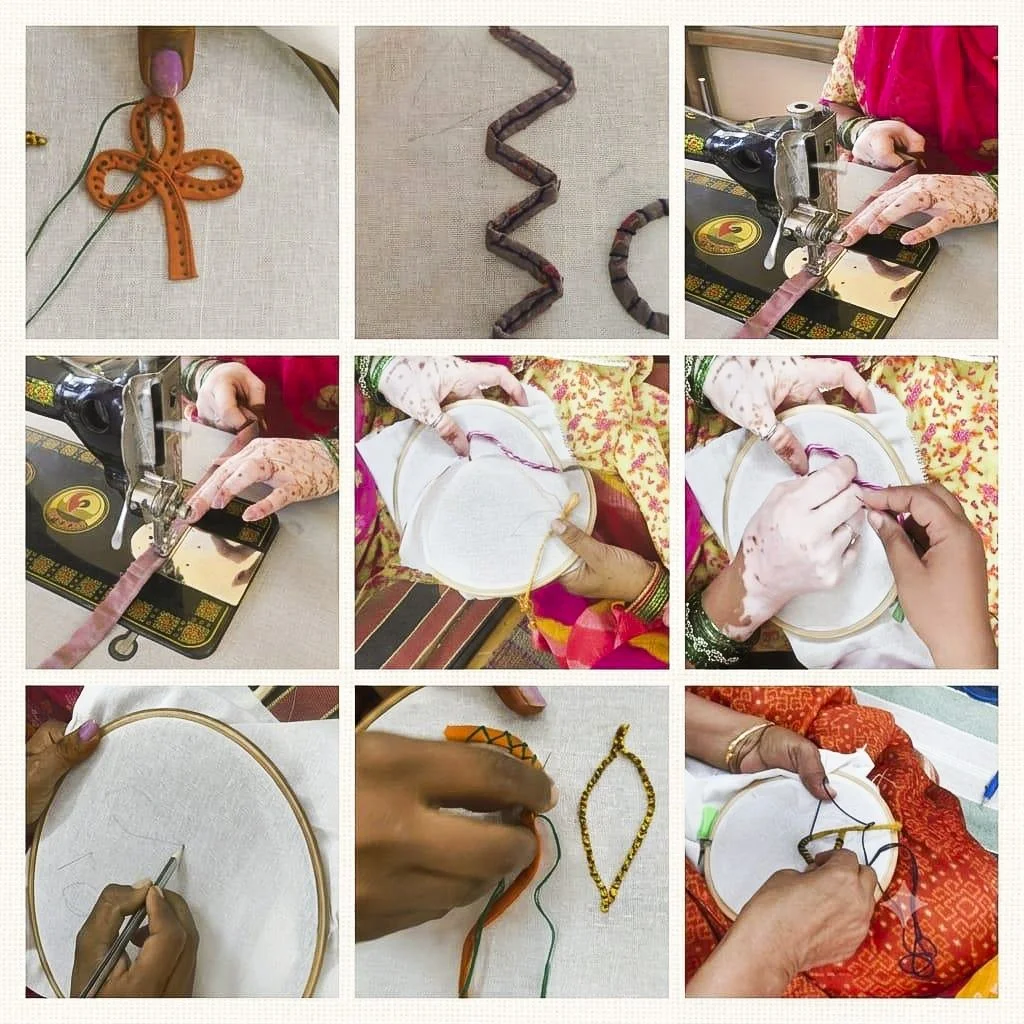
Kamlesh Ratnu brings advanced professional techniques and the principles of sustainable fashion to Sambhali’s sewing program.
By Anne Kelleher
From Sambhali Trust’s earliest days, sewing and embroidery have been central to its vocational training programs. Starting with basic techniques, the students move on to more advanced hand and machine sewing. Those who complete the program and pass a final assessment are awarded their own sewing machines.
The economic benefits of these skills are substantial. All students in the Empowerment Centers learn to make clothes for themselves and their families. Nearly 92% of graduates also use these skills to earn income thanks to the concurrent math and literacy training.

The arrival of a fashion professional last spring promises to elevate Sambhali’s already robust sewing curriculum and align it with the fastest growing trend in the industry: sustainability.
Kamlesh Ratnu completed a master’s degree in sustainable fashion in 2022 at the National Institute of Fashion Technology, the premier fashion college in India, and began teaching at Jodhpur’s International Institute of Fashion Design. Late in 2025, he started his own fashion label and began conversations about conducting workshops at Sambhali Trust. Since May, Kamlesh has led monthly 3-day, 3-hour hands-on workshops in Jaipur and Jaisalmer for the sewing instructors at the Empowerment Centers in those locations with those from the rural program joining the Jodhpur sessions.
Sustainable fashion emphasizes durability, waste reduction, and upcycling. It is sometimes referred to as “slow fashion” in contrast with the cheaply and often unethically made and quickly discarded “fast fashion” that is filling landfills.
In addition to environmental and economic goals, sustainable fashion has social goals that align with Sambhali’s values. These include protections for workers such as fair compensation and reasonable working hours throughout the global supply chain. Especially relevant for Sambhali, the sustainable fashion movement supports local craftmanship and artisan communities.
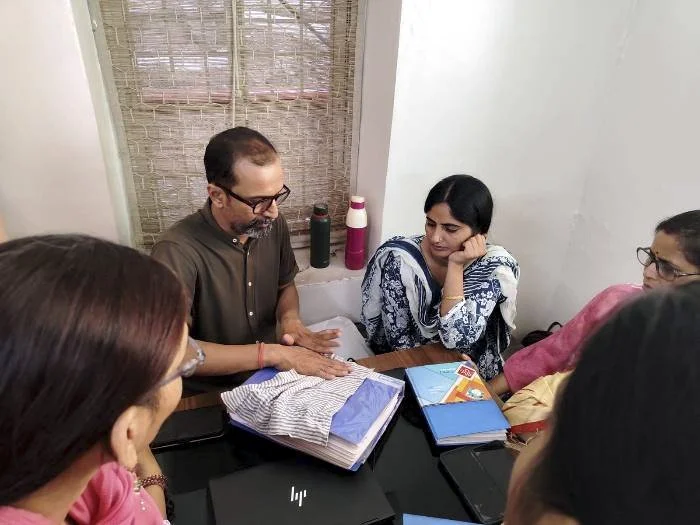
In his workshops, Kamlesh aims to strengthen the trainers’ knowledge of finishing techniques, quality control, and responsible material use. He also aims to find ways to enhance Sambhali’s sewing curriculum across all 10 centers.
For the first workshops, Kamlesh guided the women in the design and production of a reusable sanitary pad. Recognizing the women had more familiarity with the requirements for this product, the design work established a collaborative atmosphere that has continued. It also provided a way to introduce principles of product testing and data collection. The women distributed finished pads at Sambhali sites along with a questionnaire they developed for collecting feedback.
In subsequent sessions, students have learned to use new techniques for surface embellishments, creating unique textures out of leftover fabric. By introducing waste-reduction tactics alongside foundational concepts, such as color theory, and these more advanced embellishment techniques, Kamlesh imparts both practical skills and the visual understanding necessary to turn scrap materials into functional, well-designed projects.
Kamlesh uses various methods to gauge the trainees’ progress, including presentations, sample-making, and short tests. One of these assignments required a PowerPoint report. When Kamlesh learned that the women did not know PowerPoint, he taught them how to use it, which was an unexpected extra benefit.
The expertise gained in the workshops will spread as the participants bring what Kamlesh has taught them to the more than 250 women and adolescent girls who study sewing at Sambhali Empowerment Centers every day. As many Sambhali sewing instructors began as Empowerment Center students, the training should continue to provide value far into the future.
Kamlesh speaks enthusiastically about his experiences in the workshops. “[They] are doing brilliantly. If I were the student, I don’t know if I would do as well.”