
How Jharna Found Her Voice
By Nikki Reen
What does it really mean to feel empowered? For some, it is about healing and rehabilitation; for others, it is about encouragement, self-belief, and the skills to earn a living. For Jharna*, empowerment means all these things.
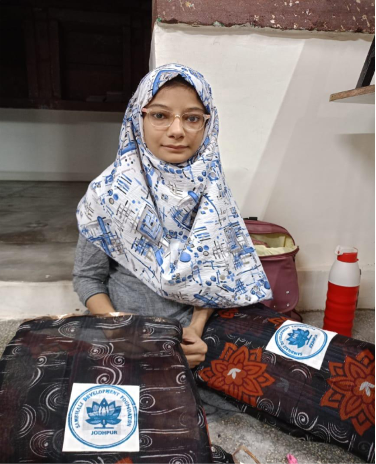
Jharna is 17 years old and lives with her parents and sister. Her father runs an embroidery shop. She first heard about Sambhali's Empowerment Center through her auntie, who was already participating in the program.
Before coming to the center, Jharna did not know how to sew. Her father runs an embroidery shop, but at first he didn't want her to work there. Through Sambhali, she learned to sew and embroider on her own — and as her skills grew, so did his confidence in her. Now she is producing items for the local market, earning her own income, and proud of the independence she built for herself. Her father has come around too, and today he welcomes her contribution to the shop.
Jharna especially enjoys the workshops at Sambhali Trust, where she learns new things, and the friendships she has formed. She and her friends share stories about their families and daily lives, and they enjoy the activity days on Saturdays — though, as she says, they truly have fun every day.
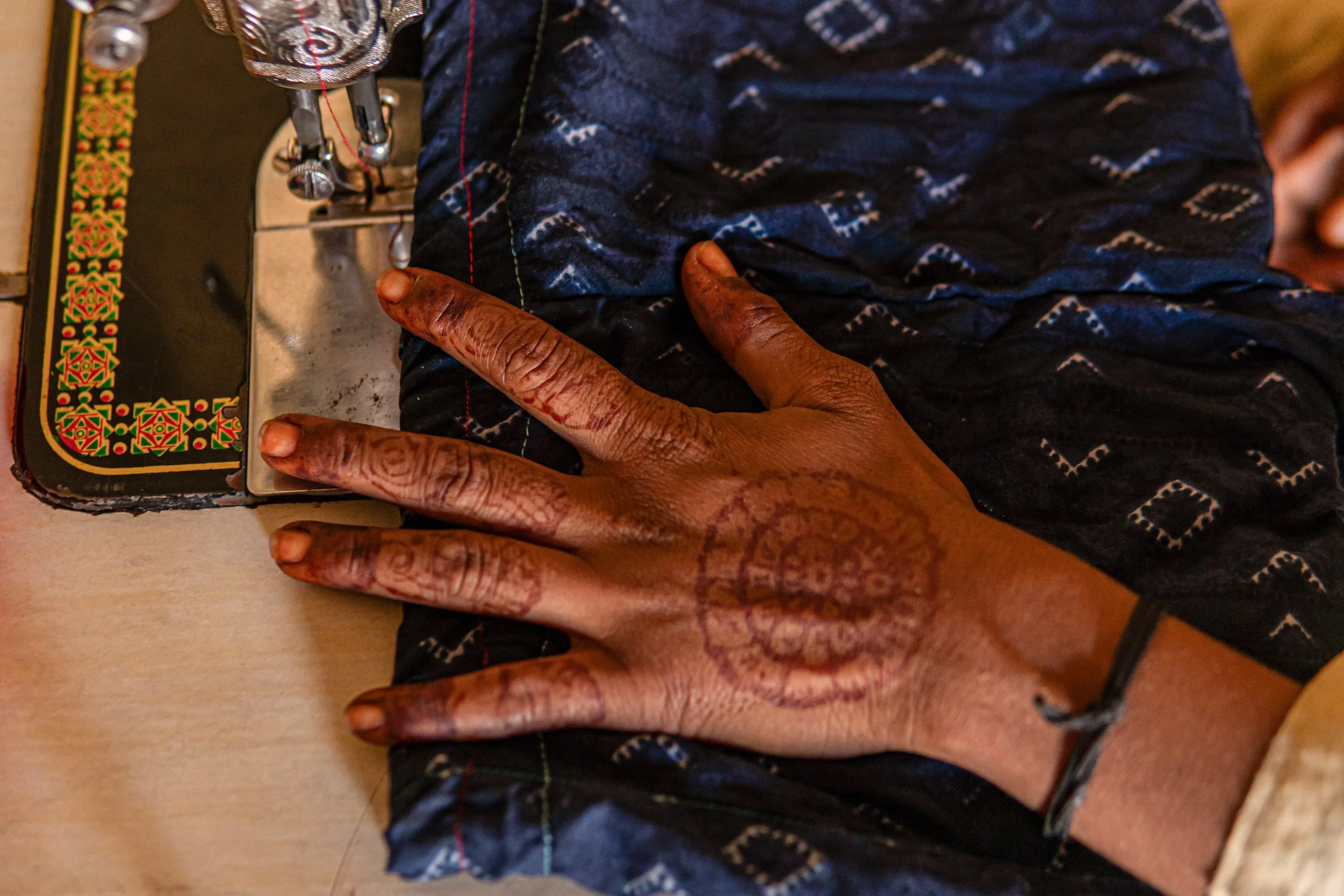
One of the things Jharna appreciates most is the opportunity to receive local market work; at the moment, she is making a bag. She feels proud that Sambhali has trusted her with this responsibility and is deeply grateful for the support and confidence the organization has placed in her.
Stories like Jharna's are at the heart of Sambhali's Empowerment Centers across Rajasthan. These centers provide a safe, supportive space where marginalized women and adolescent girls receive the basic education they were previously denied, as well as vocational training in sewing and embroidery. The goal is to build self-esteem, confidence, and self-expression while creating tangible pathways to financial independence.
Each year, Sambhali Trust Empowerment Centers provide around 270 women and adolescent girls with:
Primary education in English, Hindi, and math, with a focus on ensuring that all students become literate.
Vocational training in sewing and embroidery to make Indian garments, accessories, and soft toys — enabling women to earn an income in their local communities and access a larger market through the Sambhali Boutique.
Educational workshops on crucial topics such as women's health and hygiene, Indian history and geography, and gender-based violence.
Personal development and safety, including activities that encourage self-esteem, confidence, and self-expression, as well as self-defense training.
Access to Sambhali’s wraparound services including the Sathi health program and the Nirbhaya gender-based violence program.
The results are striking. Recent academic assessments across all the Empowerment Centers show impressive growth between baseline and final academic testing, with a 55% increase in Hindi literacy, 61% increase in English literacy, and 59% increase in math. Eighty-nine percent of graduates earn income from their sewing and embroidery skills. Self-confidence and advocacy for other women vastly improved, rising 50% and 55% respectively. At the end of the program, 70% reported they were quite a lot or very confident speaking their mind, and 66% said they encourage other women quite a lot or very often. Additional life skills training is paying off, with participants reporting that their ability to protect themselves rose by 62% and their knowledge of health and hygiene rose by 53%.
Through this combination of education, skills-building, and emotional support, Sambhali's Empowerment Centers transform the word "empowerment" from an idea into a lived reality—one woman, and one story, at a time.
*Names of minors have been changed.