
By Ellie Hamburger and Khusbu Patel
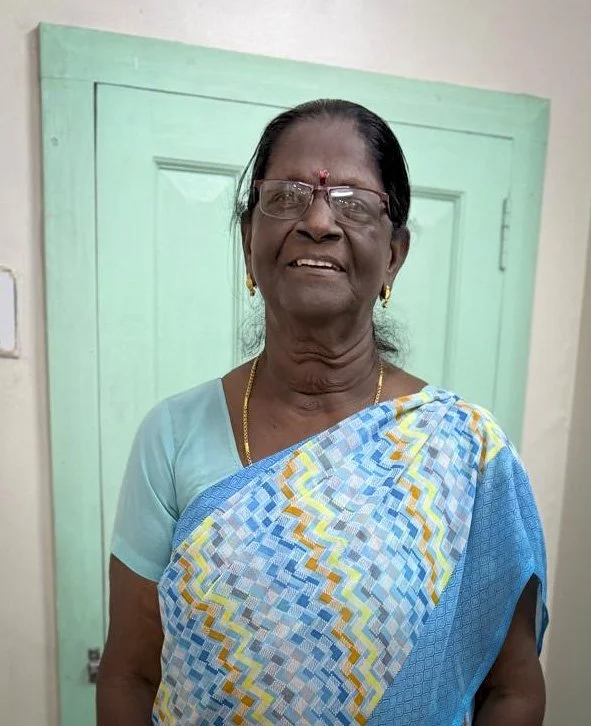
Saraswati Nair
The nutrition workshop had barely ended when it happened. Lead teacher Manju Solanki stepped to the front of the room at the Abhaya Empowerment Center in Jodhpur and introduced the women seated before her to a new face: Saraswati Nair, an experienced former government nurse, who would now be available to them for health advice, education, and basic clinical care. Manju introduced two others as well—Kuldeep Singh Khichi, a patient navigator who could arrange and accompany them to doctors’ appointments, and Hemant Bhati, a familiar presence already known for helping participants access government services. Within minutes of the introduction, three women had already approached Saraswati with health concerns. And so began a busy year for the Sathi team.
Filling a Gap in Services
Since its founding in 2007, Sambhali Trust has built a remarkably wide circle of support for participants—legal services, psychological care, self-defense education—and has kept looking for gaps to fill. Health was one of them. In January 2025, made possible by a generous grant from an anonymous Sambhali U.S. donor, Sambhali launched the Sathi program to provide health education and basic clinical care to the women, children, and members of the LGBTQIA+ community that Sambhali serves. The program’s name says it all: Sathi means “companion.” That’s exactly what Saraswati, Kuldeep, and Hemant set out to be — trusted, steady, and present in a way that formal healthcare systems often are not.
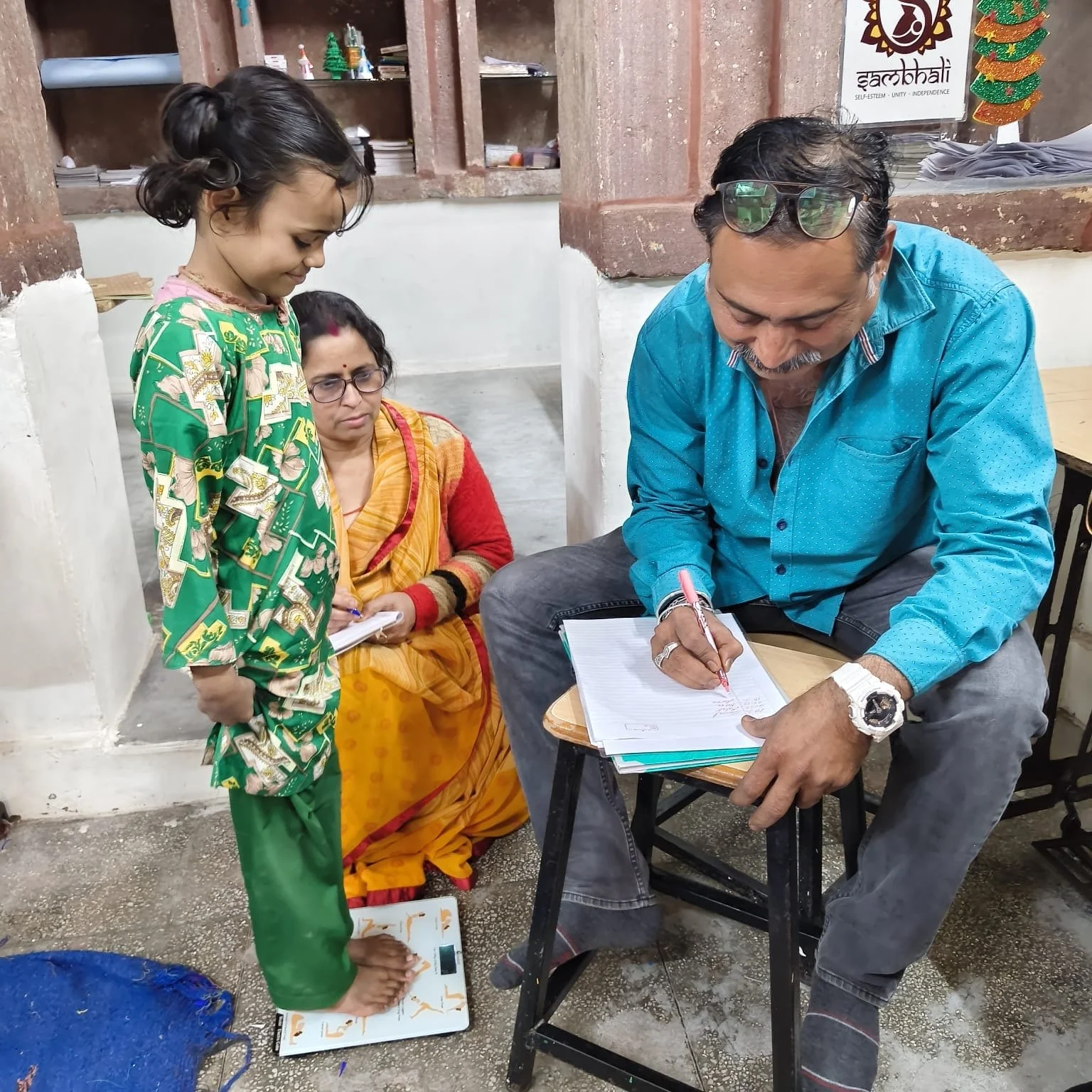
For many in the Sambhali community, navigating healthcare can feel impossible. Unfamiliarity with available resources, confusing systems, and outright obstructive responses when seeking care are common barriers. Saraswati and Kuldeep’s deep knowledge of both medicine and the system itself mean participants don’t have to navigate any of it alone. Hemant, meanwhile, continues to connect people to government benefits and insurance they were often entitled to but hadn’t been able to access.
The numbers from the program’s first year tell a clear story. Sathi logged 1,284 nurse visits—patients ranging in age from three months to over 60 years old. The team reached girls in the Boarding Homes, children in the Primary Education Centers, women in the Empowerment Centers, participants in the Garima LGBTQIA+ program, and Sambhali staff. They addressed everything from allergies and anemia to abdominal pain, headaches, gynecologic concerns, fever, and cold symptoms. In more than three-quarters of those visits, Saraswati was able to provide treatment on the spot; sometimes all that was needed was guidance and reassurance. For 83 patients, the team arranged and accompanied them to specialist appointments for further diagnosis and care.
Health Education
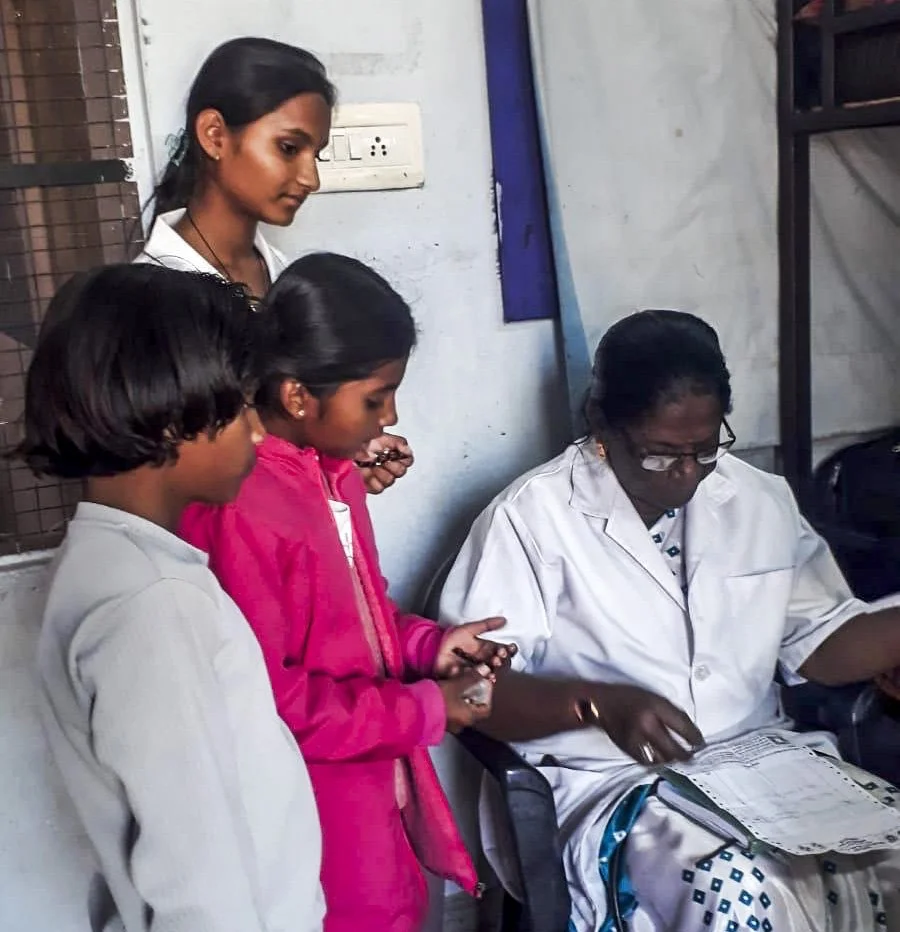
Clinical care is only part of what Sathi does. Boarding home girls and Empowerment Center participants also receive ongoing health education from teachers and the Sathi team, covering topics including nutrition, menstruation, contraception, child safety, and immunization. Many of these workshops are developed in collaboration with Sambhali U.S. volunteers.
The connection between education and care has already produced meaningful results. After identifying and treating cases of anemia among women and children, the team followed up with nutrition workshops focused on practical ways to incorporate iron-rich foods into everyday meals using ingredients already accessible at home. It’s the kind of holistic approach that makes Sathi more than a clinical service.
Monitoring and Evaluation
The Sathi team tracks data on every clinical encounter—not for its own sake, but to spot emerging needs and shape future programming. Sambhali U.S. volunteers assist in compiling the data, adding depth to the team’s own quarterly reporting. It’s a feedback loop that keeps services responsive to the community.
One year in, Sathi has already earned something that takes time to build: trust. With that foundation in place, Sathi is well-positioned to grow—deepening the care it provides and extending Sambhali’s mission to help people take control of their lives and well-being.