
From the Thar Desert to Geneva: The Women Sambhali Brought to the World's Attention
by Sweta Waghela
photo Kathleen Gerber, Photographers Without Borders
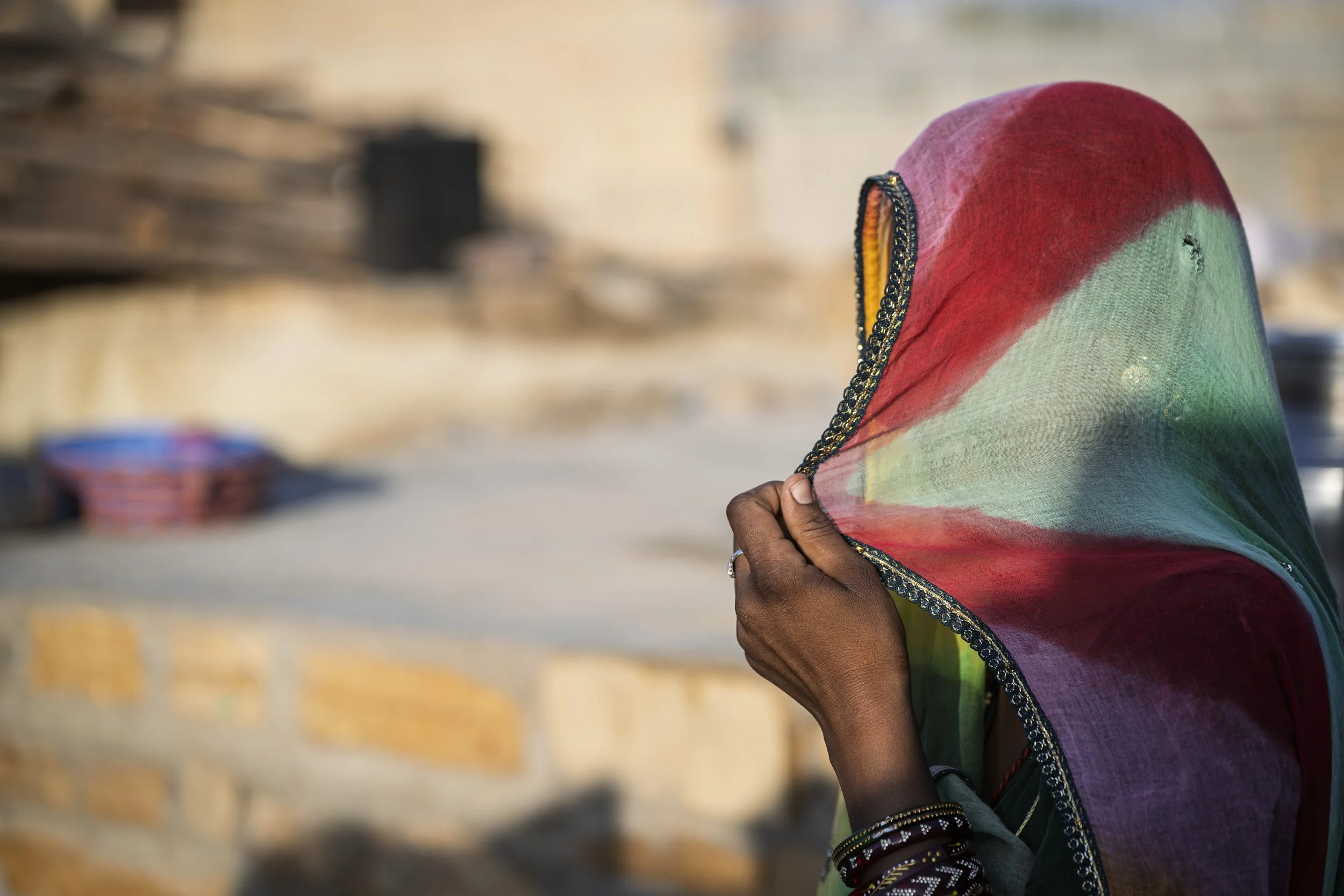
For the women and families who have crossed the Thar Desert from Pakistan into Jaisalmer, leaving home was not a choice made lightly. It meant leaving behind everything familiar. The journey across the desert was harrowing, often without food or water across one of the harshest landscapes on earth. But for many, it felt like the only way forward as they searched for safety and stability.
What waited on the other side was uncertainty. For women and children who had already lost so much, the barriers to rebuilding a life were steep. Many arrived unable to write their own names, struggling to access housing, healthcare, education, or a means to support themselves and their families.
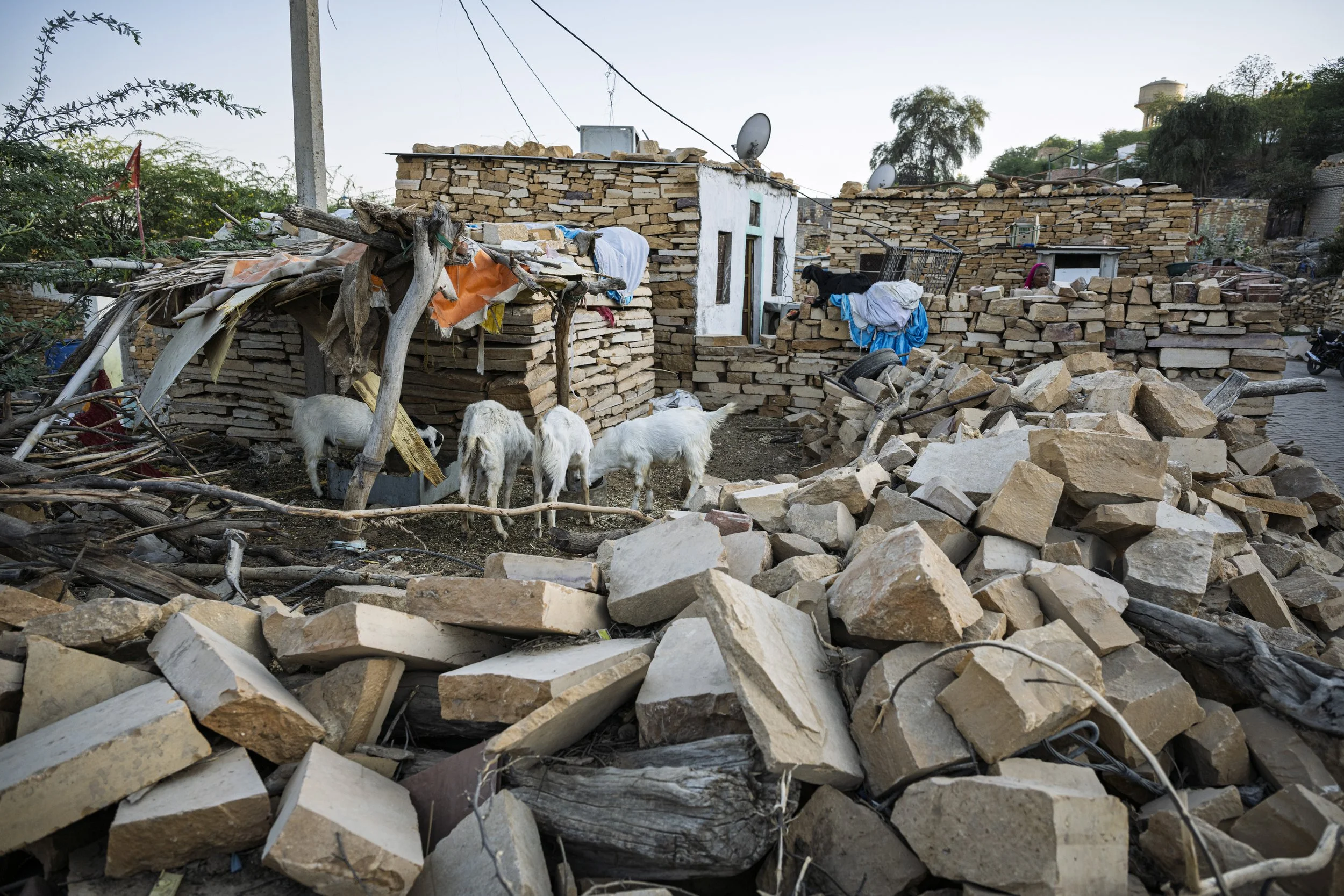
A home in the bhil basti, Jaislamer. Kathleen Gerber, Photographers Without BordersSambhali Trust came to Jaisalmer during the pandemic when community members asked the organization to provide food support during the Covid 19 lockdown. Women learned of Sambhali’s programs and asked it to return when the pandemic was over. Staff recognized that Jaisalmer urgently needed the same programs and resources it had been providing the women and girls of Jodhpur since 2007. In 2022, the Trust established a program office along with four Empowerment Centers and Primary Education Centers. Through safe spaces, counseling, education programs, and livelihood training, these centers work to help women and children who have often lost everything begin to rebuild. Today they work with approximately 140 children and over 120 women, including refugee children receiving education for the first time. Women who once rarely left their homes have discovered, through Sambhali, that another kind of life is possible. Refugee women have gained practical skills, learned to read and write, and found a community that offers both support and dignity. The goal, as it has always been, is not charity but transformation.
This past March, Sambhali Trust brought these stories to Geneva, Switzerland, for the 61st session of the United Nations Human Rights Council, and the organization's presence there was significant. Sambhali Trust has held UN Economic and Social Council (ECOSOC) Special Consultative Status since 2015, giving it an official voice in international human rights discussions, and this year marked one of its most visible and substantive participations yet. The Trust submitted four written statements to the Council covering issues central to its mission: advancing universal human rights through community action; building community-based mechanisms for women's empowerment; confronting intolerance and empowering marginalized girls; and, centrally, upholding dignity and hope for asylum seekers in Jaisalmer and beyond. Founder Govind Rathore addressed the Council directly, describing what displaced families face on their journey and the conditions they flee. Volunteer Tasha Stoppler delivered an oral statement to the Special Rapporteur on minority rights, drawing from Sambhali's work on the ground to make the case that structural barriers do not just limit opportunity; they shape entire lives. Her message was clear: minority women are not passive recipients of charity. Given genuine support and equitable opportunity, they become agents of their own transformation.
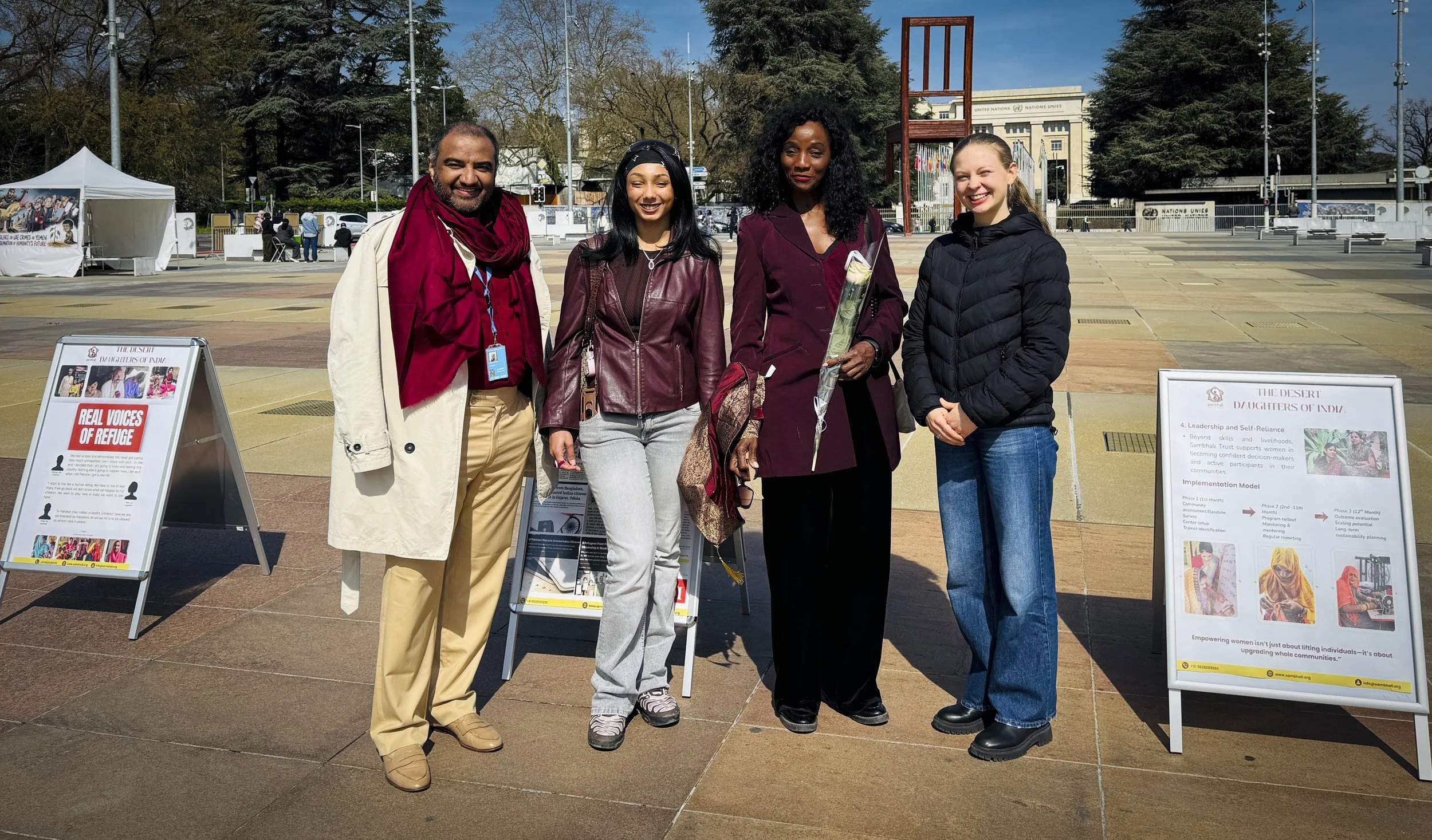
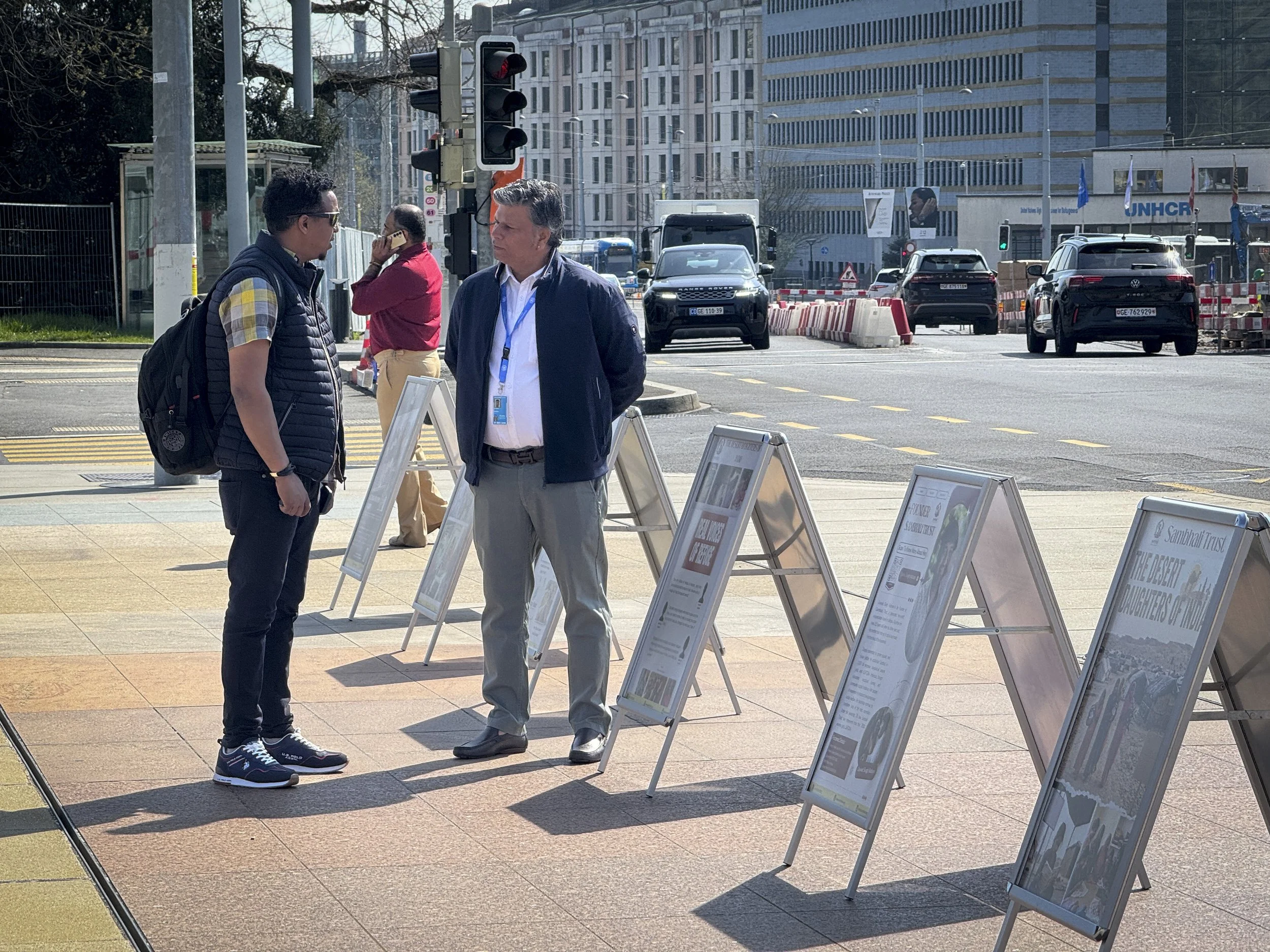
Sambhali Trust team in Geneva with “The Desert Daughters of India” exhibit.
To make these stories visible beyond the Council chambers, Sambhali organized two public events in Geneva. On March 24, the Trust hosted a photo exhibition called "The Desert Daughters of India" at the Broken Chair Monument, the iconic sculpture near the UN Palais des Nations that has come to symbolize the protection of civilians worldwide. The exhibition offered visual testimony from women who have crossed borders under extraordinary circumstances and are now working to reconstruct their lives. Two days later, a side event featured a film screening and the launch of a publication documenting asylum seekers' experiences firsthand.
Reflecting on the week from Geneva, the Sambhali team wrote: "This was not about speaking for them. It was about making space, so their journeys are seen, heard, and respected." It is worth pausing on what it means for an organization like Sambhali Trust to be present in these conversations. Human rights councils are often filled with the voices of governments, large international NGOs, and policy institutions. Sambhali Trust is, at its core, a grassroots organization, one that started in the backstreets of Jodhpur, built on the belief that the women closest to the problems are also closest to the solutions. To carry those stories from the desert to Geneva, and to have them heard in the halls of the United Nations, is no small thing.
For those of us supporting this work through being a part of Sambhali U.S., this moment is a reminder of what we are part of. Every contribution, every newsletter read, every volunteer hour is connected, however indirectly, to a woman in Jaisalmer who crossed the Thar Desert and is now, slowly, building something new.
From the desert to Geneva, that work continues.